

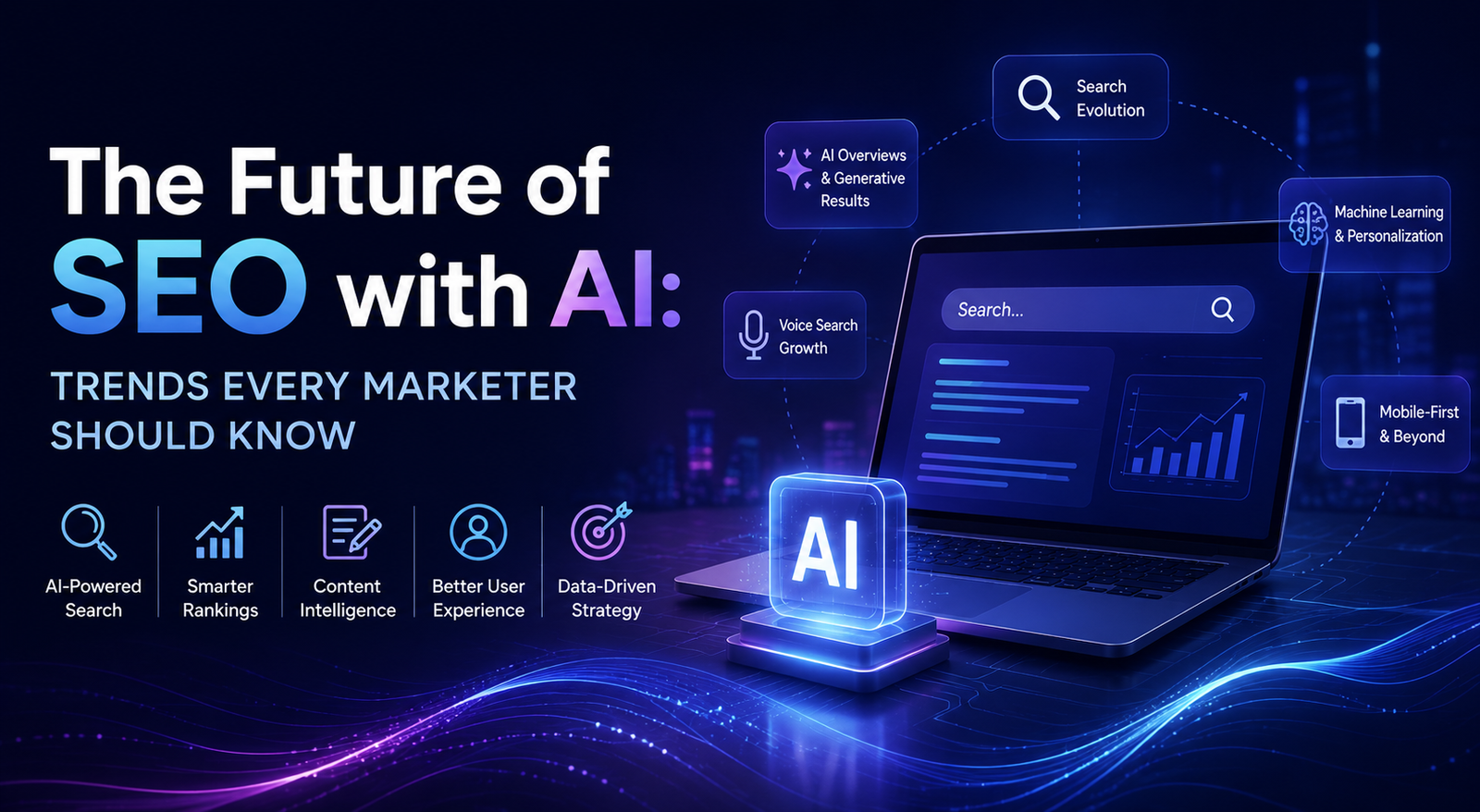
The Future of SEO with AI: Trends Every Marketer Should Know
Search has never been more competitive, and artificial intelligence now shapes how most results are ranked and displayed. Marketers who treat SEO the same way they did three years ago are quietly losing ground. The future of SEO with AI is not something coming next year. It is already deciding who shows up first and who disappears from page one.
Search Engines Now Read Content Like Humans Do
Google’s AI systems, including RankBrain and the Search Generative Experience, no longer just match keywords to pages. They understand meaning, context, and intent. A page that genuinely answers a question clearly will outrank a page that repeats a keyword fifty times but says very little.
This shift changes everything about how marketers should write. Short, direct answers beat long, padded paragraphs. Well-organized headings help AI read and summarize your content faster. Next, pages that are easy to understand also tend to get cited inside AI-generated search summaries, which puts your brand in front of users even before they click a link.
Voice Search Is Pulling SEO in a New Direction
People are no longer typing “coffee shops Delhi.” They are asking their phones, “What are the best coffee shops near me open right now?” That small shift in phrasing changes everything about how content needs to be written.
Voice queries are longer, more conversational, and almost always tied to immediate intent. For example, FAQ sections inside blog posts work extremely well for capturing voice search traffic because they mirror how real people ask questions. In addition, question-based headings signal to AI assistants that your content is a reliable, direct source of answers.
Predictive SEO Gives Early Movers a Real Edge
AI tools can now spot rising keyword trends before they peak. Platforms like Semrush and Google Trends, combined with AI analysis, show marketers which topics are about to grow in search volume. Publishing content early on a rising topic means ranking high before competitors even notice the opportunity.
Here is a simple way to use this:
- Find keyword clusters with growing search interest, not just high current volume.
- Publish a strong cornerstone article early, then add supporting content as the trend builds.
- Refresh older content when AI signals show renewed interest in a topic.
This approach keeps your content ahead of demand rather than always chasing it.
Technical SEO and Personalization Are Getting Smarter
AI tools such as Ahrefs and Screaming Frog have streamlined web audits into automated processes capable of not only identifying problems but also recommending solutions in order of significance. Activities that would require the intervention of a developer take mere minutes. Schema markup, page speed tests, and crawl error reports are all easier to achieve.
Search engines are increasingly personalizing search results. The searches of two people using the same keyword can lead to entirely different search results due to their geographical location, device, and search history. Content must cater to a particular audience, not to keywords.
People Actually Want Answers, Not Just Links: Your SEO Questions Solved
Q1. Will AI replace SEO professionals in the future?
A1. No. AI handles data analysis and automation, but SEO still needs human strategy, creativity, and brand understanding. AI makes SEO professionals more productive, not unnecessary.
Q2. How does Google’s AI affect small business websites?
A2. Small businesses can actually benefit. AI rewards helpful, specific content, which is something small brands can produce without a massive budget. Niche expertise often outranks generic big-brand content.
Q3. What is the role of E-E-A-T in AI-driven SEO?
A3. E-E-A-T stands for Experience, Expertise, Authoritativeness, and Trustworthiness. Google’s AI uses these signals to judge content quality. Publishing credible, well-researched content written by real experts consistently improves rankings.
Q4. Is keyword research still relevant for AI SEO?
A4. Indeed, it is, but the approach is different. While keywords will continue to influence content creation, the trend moves from exact matches to topic groups and search intent. AI technology will assist in discovering better keyword strategies more quickly than before.
Guess No More. Optimize for Where Search Is Heading.
Today’s successful SEO players do not necessarily invest more money; they simply adapt faster to changes. In the context of SEO with AI, success lies in creating valuable, structured, and informative content based on genuine human requirements. Start by testing one part of your present SEO strategy using AI technology today, and get results immediately.


Comments are closed